The people
PEOPLEWhat holds Karami weaving together is not the looms or the buildings. It is people. One who kept it alive, one who is taking it on, one who meets its difficulty every day, and one who draws the patterns. Four points of view on how this craft has continued.

KitayamaChairman
PROTECTIONHow it was kept
The parent company went bankrupt; civil rehabilitation followed. Closing the business was a real option. The looms stayed, and so did the people and the customers. Repair the ageing machine, keep weaving. Protecting a craft, this record shows, means not letting it stop.
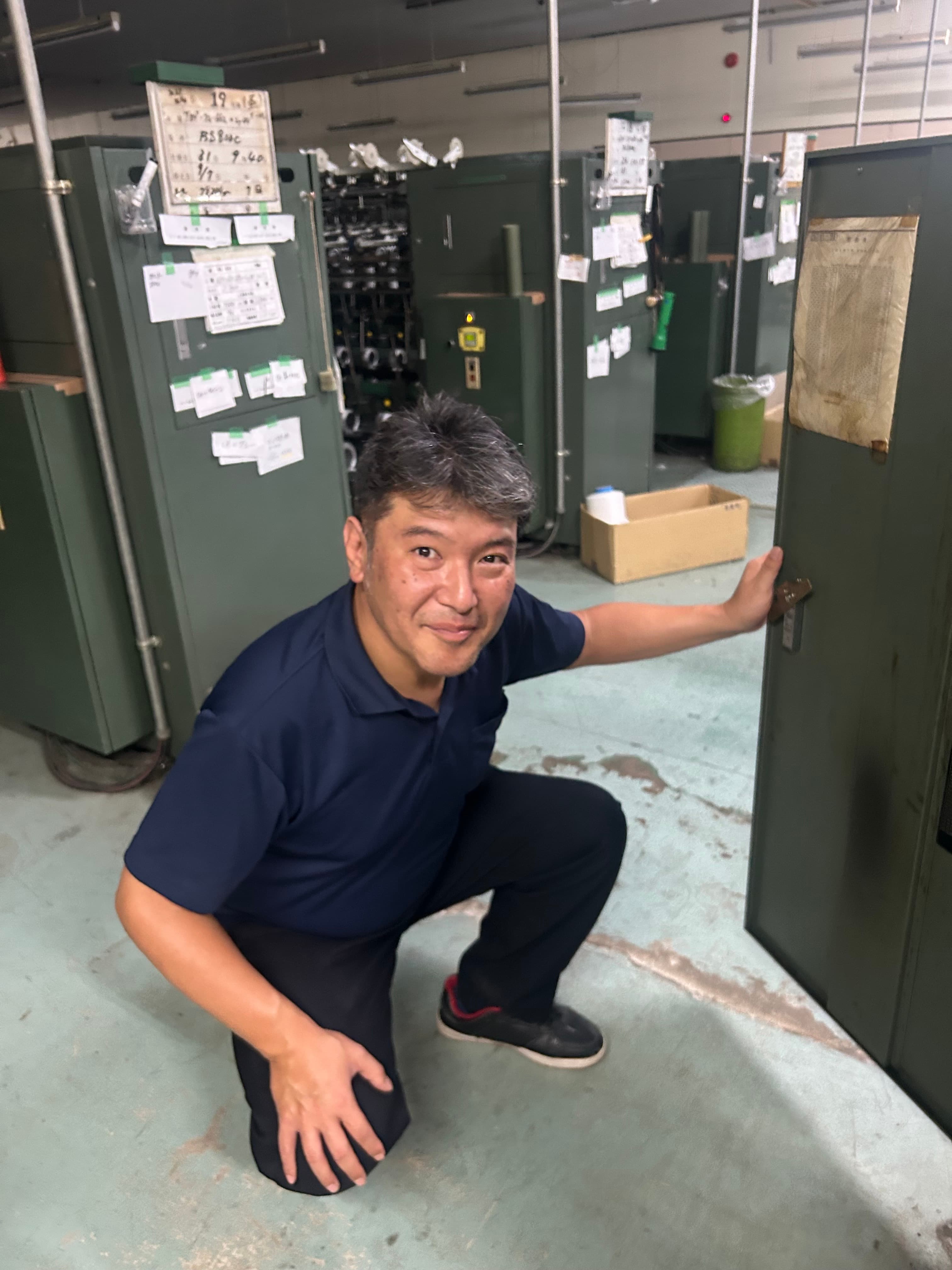
Shima
INHERITANCEWhat is being passed on
What is inherited is more than a mill and its looms. It is the judgement to read a yarn and set a machine — and that has to reach the next generation in a form they can use. Speaking for the cloth in our own words, as SHALO, is one step toward it.
Mizumoto
DIFFICULTYWhere the difficulty lies
The same settings give different cloth, depending on the yarn and the state of the machine. Pull too hard and the thread breaks; leave it slack and it breaks too. How far to move what cannot be written down as a number — it is learned by hand and eye. That is the hardest part to hand over.
Nishida
DESIGNWhere the patterns come from
The engineer behind the weave structures of our Karami cloth. Flexible thinking and sure technique turn into a wide range of original patterns.