Weaving on, in this place
STORYHakui, Ishikawa Prefecture. Karami cloth has been woven here, at the southern edge of the Noto Peninsula.
01What Hakui has kept
HAKUIHakui, Ishikawa Prefecture, at the southern edge of the Noto Peninsula. In the mill here are the looms that weave Karami, the people who work them, and skill built up over a long span of time. Cross the warp, pass the weft, hold the weave even. Repeating that motion takes more than a weave structure worked out on paper: it takes the knowledge to adjust thread tension and the movement of the loom in fine increments.
With identical settings, the cloth still comes out differently depending on the character of the yarn and the condition of the machine. Reading the slight changes in how the threads move and how the weave sits, and judging what to adjust and by how much — that experience on the floor is what makes it possible to weave a delicate Karami cloth steadily. What I am taking on is not only the looms as equipment, but the skill that lives in a person's hands and judgement.
Inheriting also means more than receiving assets. It carries the responsibility to maintain ageing buildings and equipment, and to renew them where renewal is needed. For some of the older looms, parts are no longer made. We have to judge what to repair and keep running and what to replace, and to build an environment that keeps the people who work here safe and supports the production ahead of us.
To use carefully what has been handed to us, and to pass it on in a condition where the next generation can go on weaving. Protecting the craft, and renewing what supports the craft. Taking on both of those is, I believe, what it means to inherit the ability to weave that remains in this place.
- The looms
- The weavers
- Weave structure design
- Thread tension management
- Knowledge of loom calibration
02Made in Hakui, Ishikawa, Japan.
ORIGINKarami weaving is produced in Hakui, Ishikawa Prefecture, at the southern edge of the Noto Peninsula. We are committed to carrying the ability to weave Karami textiles forward, in this place, to the next generation.
Karami weaving grew out of the climate of the Noto Peninsula and the daily life of the people here. In a region where the Sōtō school of Zen took root, the skill of weaving cloth for kesa was honed alongside it. A craft sustained by the culture and the work of this place — we will carry it on here, and pass it to the next generation.
Stories of recovery from earthquake and heavy rainfall will be added to this page in the future.
LOCATIONREGION
A craft held up by its region
03What we carry on
HERITAGEKarami weaving began here in 1956, at Tatsuruhama Orimono. Chairman Kitayama's father-in-law brought in the traditional weaving knowledge of the Kiryū textile district and built a system for producing Karami cloth on power looms. From the shuttle looms of the early years to rapier looms in 1997: each change was an effort to keep weaving an inherited craft on the equipment of its time.
In 2004 the textile divisions of the former Kishi Shoji group — Tatsuruhama Orimono, Shio Orimono and others — were brought together, and TECHNOWIN began. The years that followed brought the bankruptcy of the parent company, Kishi Shoji, and civil rehabilitation proceedings. Through all of it, the efforts of Chairman Kitayama and of the people who held the company and the factory floor together kept the looms and the craft safe to this day.
Now it is our turn to take that work forward. What we inherit is not only assets — the mill and the looms. It is the knowledge and experience to read the yarn, adjust the machine and produce a delicate weave. And it is the responsibility to repair and renew ageing buildings and equipment, to face looms whose parts are no longer made, and to prepare an environment in which weaving can continue.
Those before us took in new techniques, changed their equipment, and carried this through hard times. Our task is to hand it on in a form the next generation can use. Carrying the ability to weave that grew up in this place into the future — that is what inheritance means to me.
04The Noto Peninsula earthquake, and the rain in Hakui
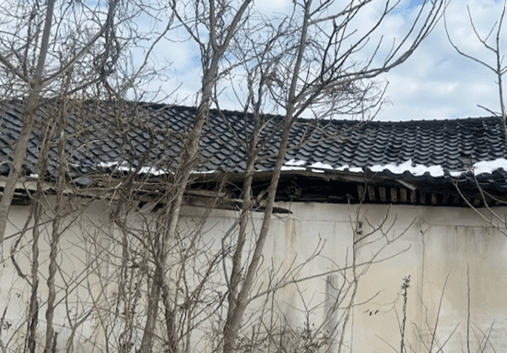
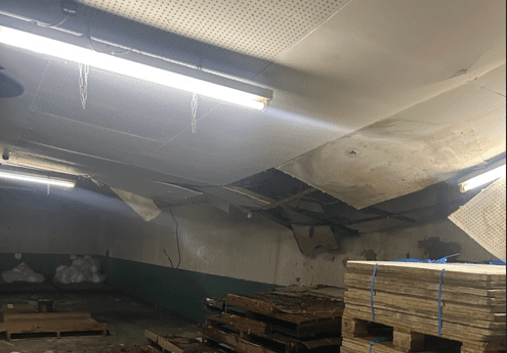
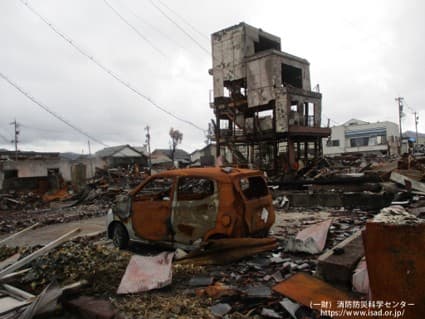
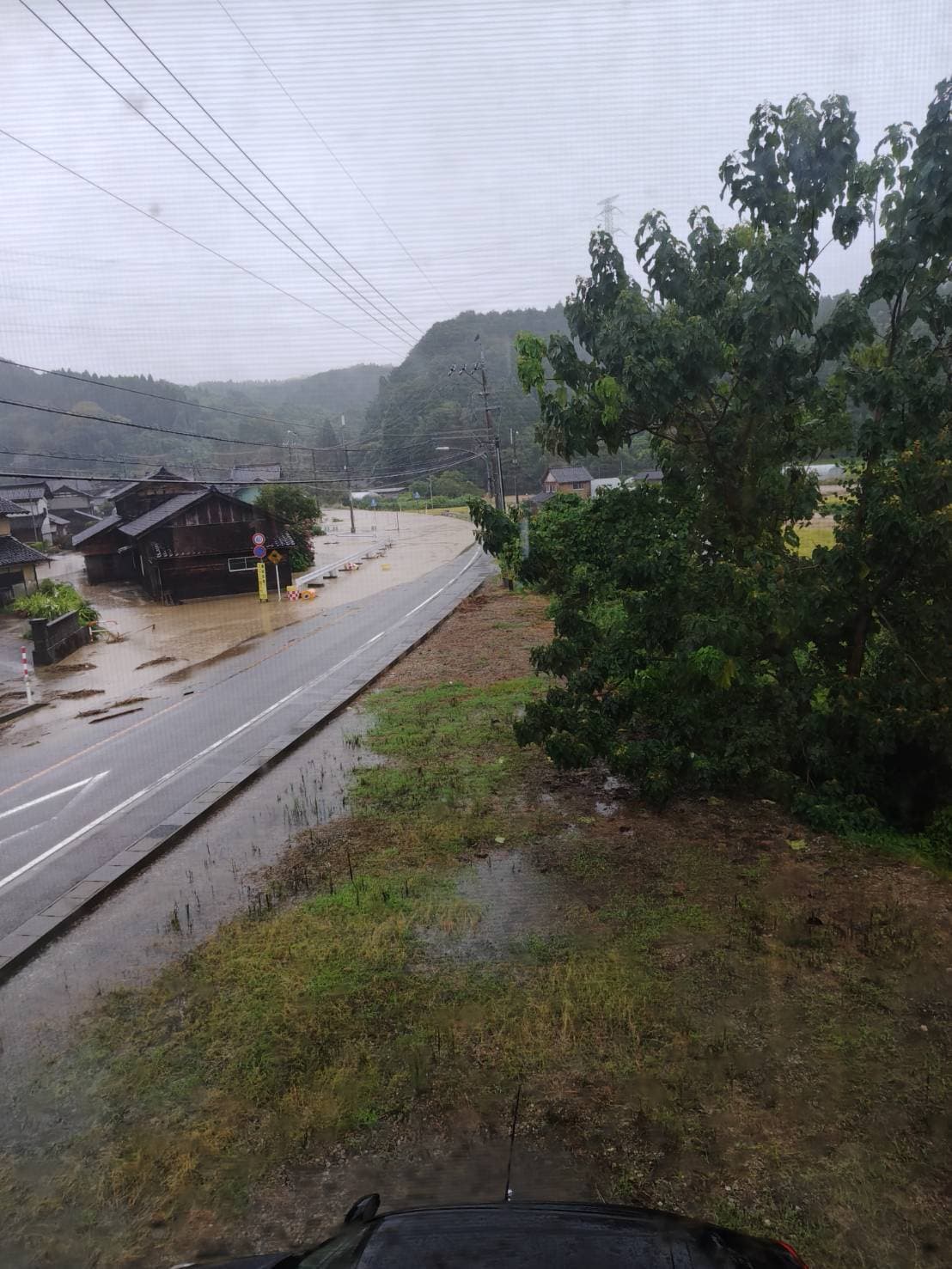
EARTHQUAKE & RAINThe Noto Peninsula earthquake of January 2024, and the heavy rain that struck Hakui, damaged the buildings that have housed this work for decades. Disaster damage compounded a structure that was already ageing, and parts of it have now begun to give way.
Looms and skill count for nothing if the buildings that hold them are not safe to work in. Since the earthquake and the rain, repairing and renewing those buildings has become something that cannot be put off. Carrying Karami weaving forward means facing the state of the mill as it now stands.
05The work of keeping the looms running
RECOVERYRenewing the buildings and the equipment. And passing the skill built up on the factory floor from person to person. Carrying Karami weaving into the future means moving on both of these without delay.
Until now, TECHNOWIN has woven mainly as a contract manufacturer for the large synthetic-fibre makers. Meeting the quality asked of us, giving shape to difficult weaves — those years are what built the skill we hold today. At the same time, our name, and the people who weave the cloth, rarely reached the person who used it.
From here we want to speak about our own craft in our own words. We are taking up work whose value is recognised directly by the people who handle the cloth and wear it, and returning what that earns to the mill and to passing the craft on. We came to see this as a new way to keep weaving.
In Noto there is a culture of Zen rooted in daily life. And for many years TECHNOWIN has woven the cloth used for Buddhist robes; that cloth has clothed a great many priests. Even where our name was not known, the lengths we wove were there through days of prayer and practice.
Until now we have supported Zen quietly, through the work of weaving. From here, while continuing that work with care, we want to carry something of the spirit of Zen ourselves, through cloth. To give our full attention to the work in front of us, and to hand on what we have received. That is what we are putting into the things we make.
紗絽SHALO
The form this new work takes is SHALO (紗絽). The name joins Sha and Ro, the two weaves that stand for Karami, with our intention to carry an inherited craft into the future. Having woven the cloth for Buddhist robes for many years, we now bring that skill, and the spirit of Zen alive in Noto, into everyday life.
06The people
PEOPLEWhat holds Karami weaving together is not the looms or the buildings. It is people. One who kept it alive, one who is taking it on, one who meets its difficulty every day, and one who draws the patterns. Four points of view on how this craft has continued.
Read more