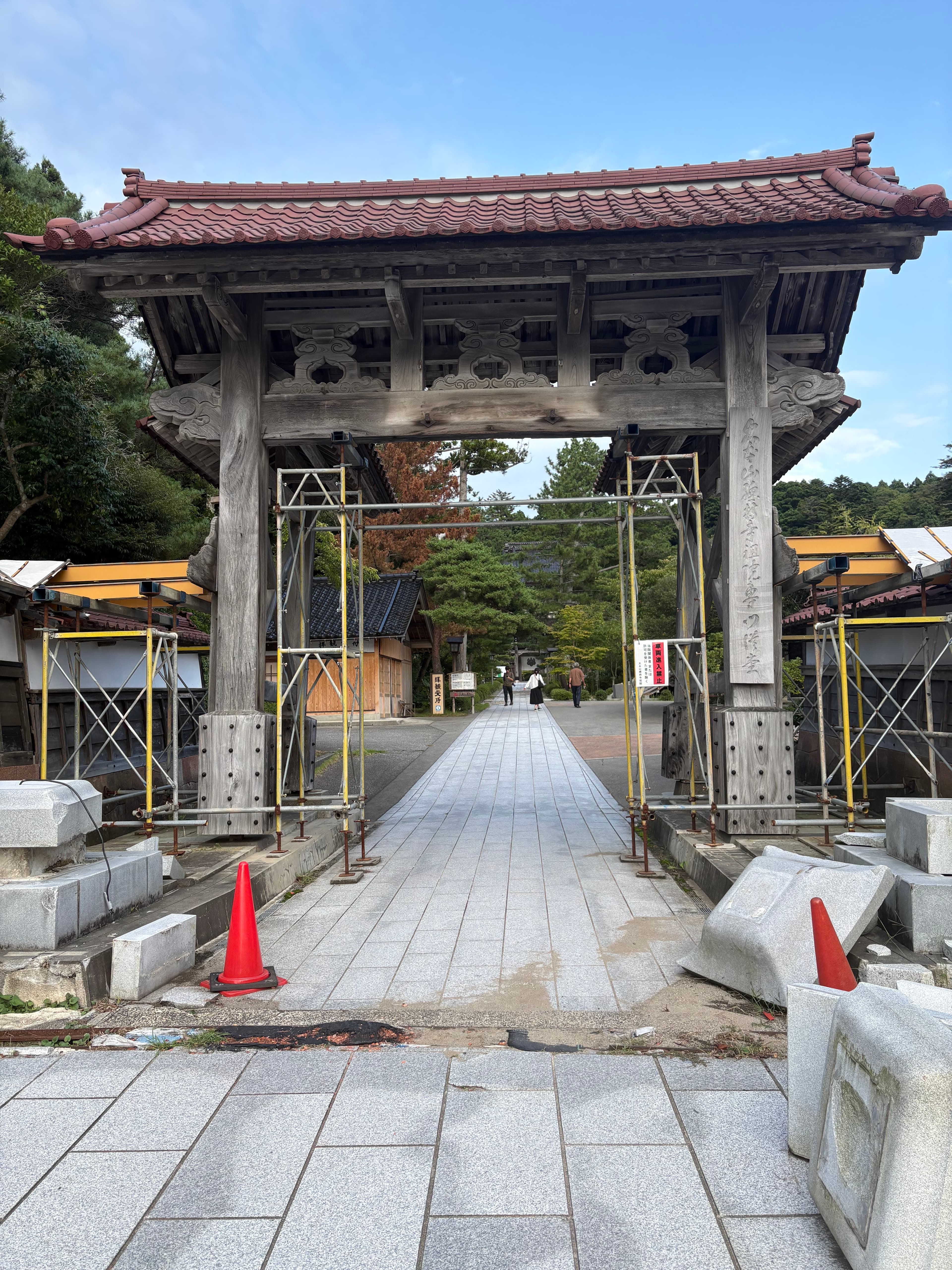
At Sōjiji Soin in Monzen, Wajima, Noto, scaffolding and steel supports surround the gate. Fallen stonework remains at its base.
A visit to the grounds reveals traces of the 2024 Noto Peninsula earthquake not only in the buildings, but also in the orientation of a stone.
A Stone That Turned 180 Degrees
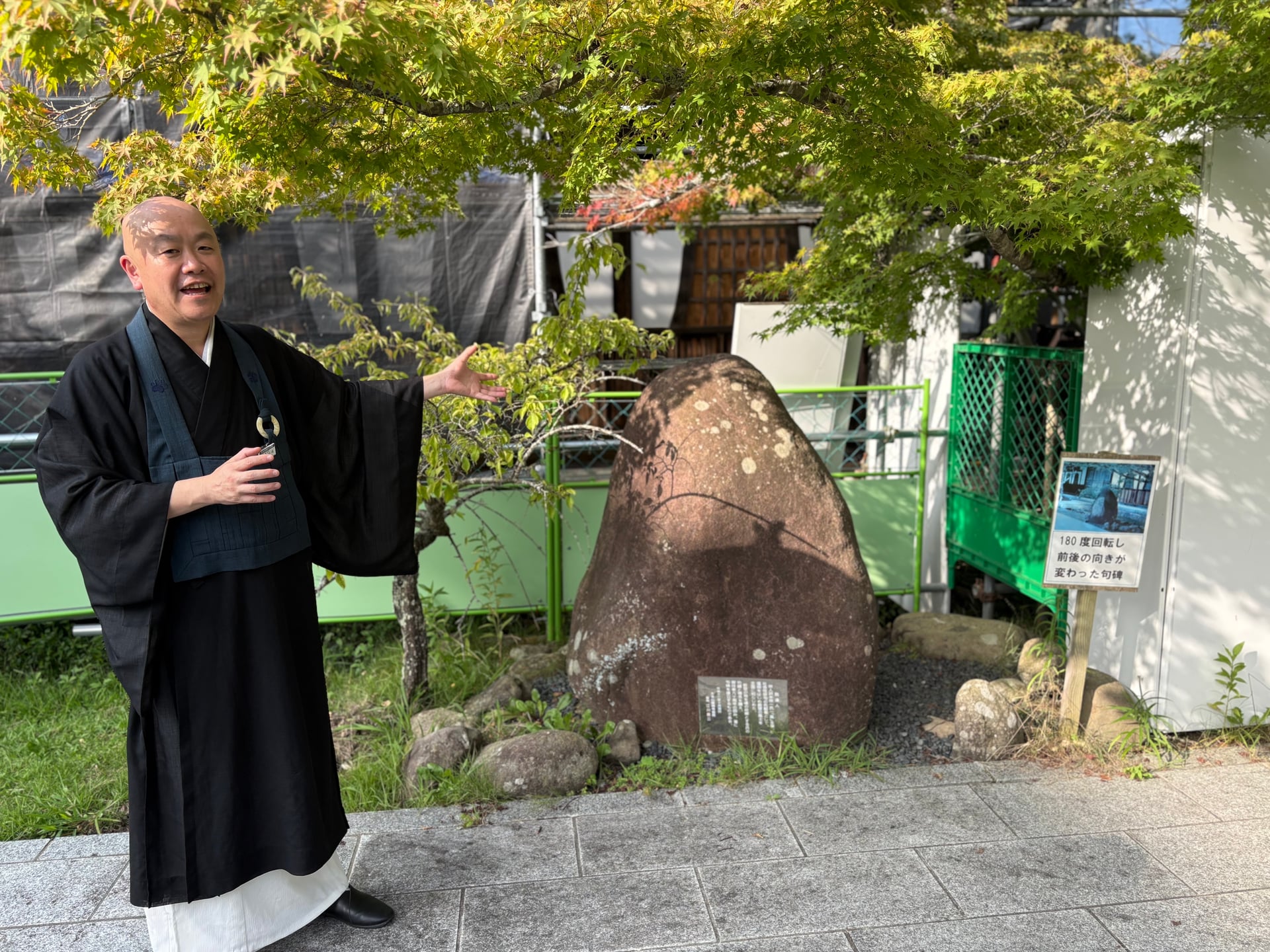
During the visit, we were shown a large stone monument inscribed with a poem.
A sign beside it explains that the monument rotated 180 degrees, reversing its front and back.
It did not simply fall or shift position: its orientation was reversed.
The photograph alone cannot show which way it originally faced. Only through the explanation on site does the stone’s connection to the earthquake become apparent.
Shaking That Felt Rotational
The priest described the shaking as feeling neither simply vertical nor horizontal, but rotational.
We often hear earthquake motion described in terms of vertical or horizontal movement. What he experienced, however, was motion that those directions alone could not adequately describe.
This is an account of how the shaking felt to him, rather than a scientific explanation of the earthquake’s mechanism.
Hearing it beside a monument that had turned 180 degrees made the account tangible.
What the Gate and Monument Tell Us
The structures supporting the gate and the monument whose orientation changed show different traces of the earthquake.
Damage to a building is visible. A change in a stone’s orientation, however, might go unnoticed without an explanation.
At Sōjiji Soin, these traces remain alongside the words of people who describe what happened.