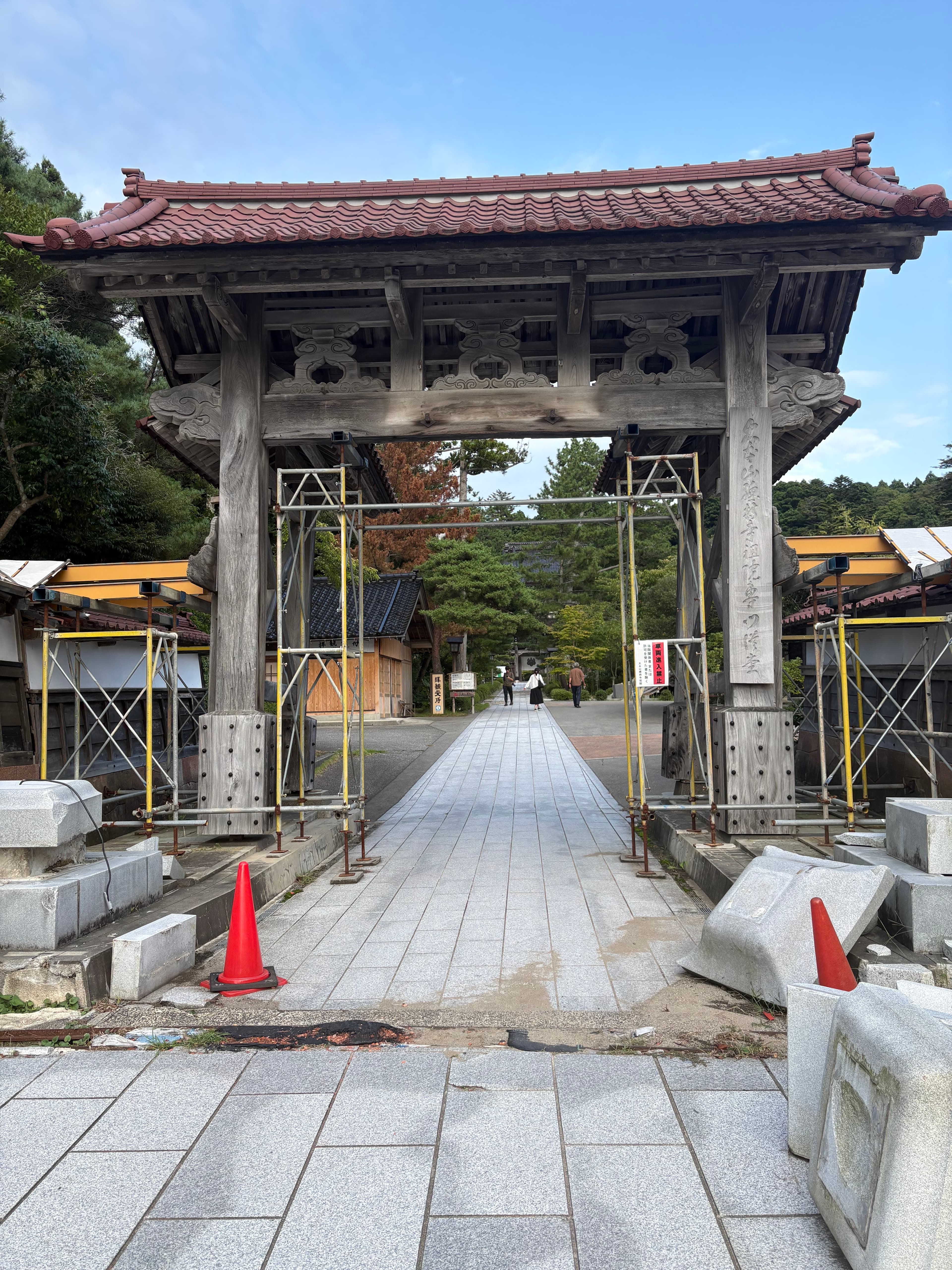
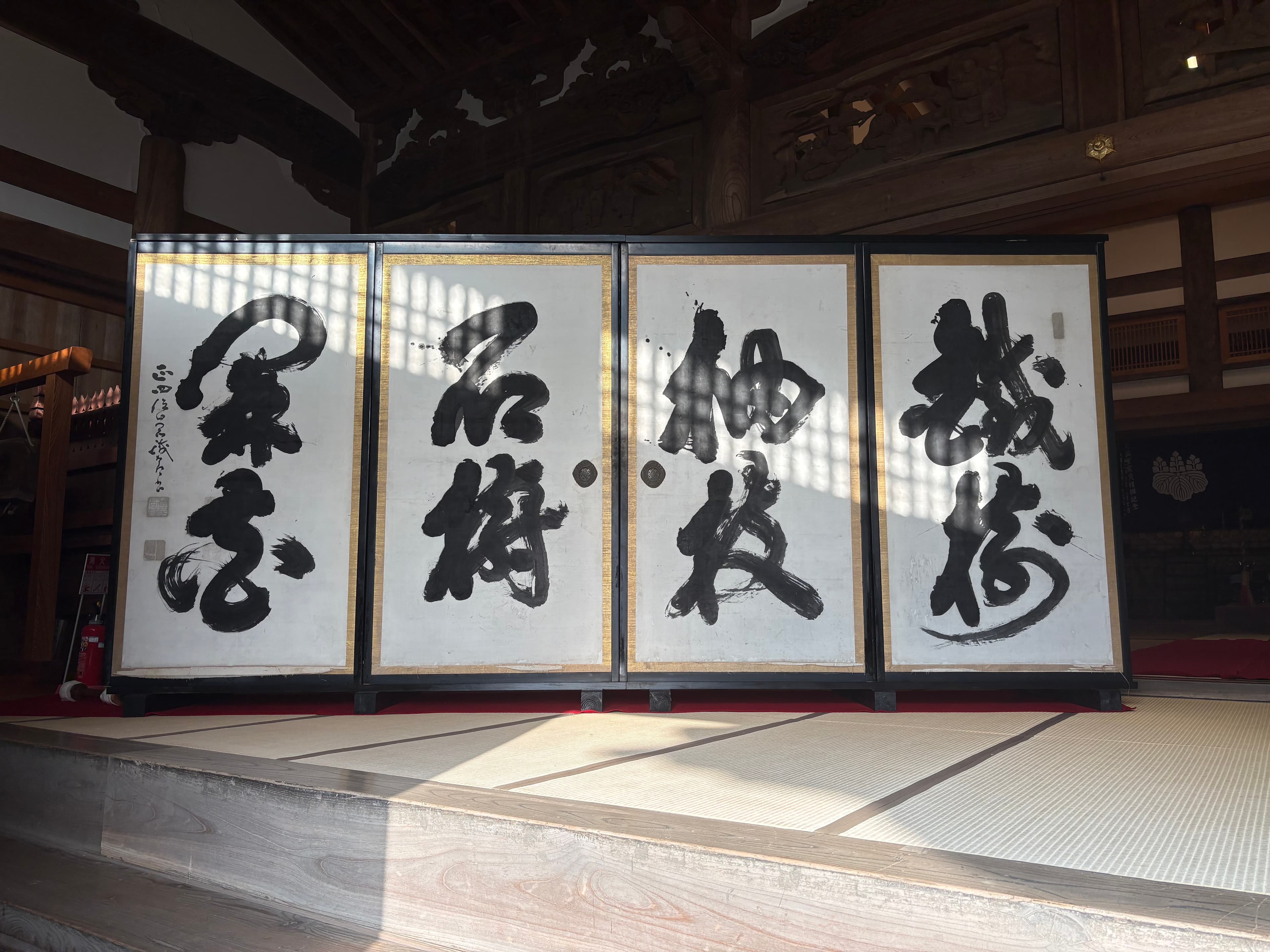
At Sojiji Soin in Monzen, Wajima, we spoke with someone involved in the reconstruction work and with Deputy Administrator Takashima (髙島弘成).
Walking through the grounds, where scaffolding still surrounded buildings, one point stayed with us: the earlier reconstruction was still helping to support the temple.
After 14 years of reconstruction
Sojiji Soin suffered extensive damage in the 2007 Noto Peninsula earthquake. Reconstruction took 14 years and cost approximately ¥4 billion, reaching completion in 2021.
The work went beyond restoring the appearance of damaged buildings. It included improvements to the ground and foundations, as well as seismic reinforcement.
Then, on January 1, 2024, less than three years after completion, another Noto Peninsula earthquake struck. Corridors collapsed, and the temple grounds again sustained major damage.
The gate and stone monument described in our previous article also bear traces of that earthquake.
Reinforcement beneath the surface
The construction professional told us that after the 2007 earthquake, the Sanmon gate had been moved so that steel pipe piles could be installed beneath it. The work strengthened the ground supporting the building, as well as the structure itself.
We also learned that reinforcement was carried out on other principal buildings across the grounds, according to their individual conditions.
When looking at a temple, our attention often goes to the scale of its roof or its timber joints. What supports it beneath the surface is much harder to see without hearing from someone who worked on it.
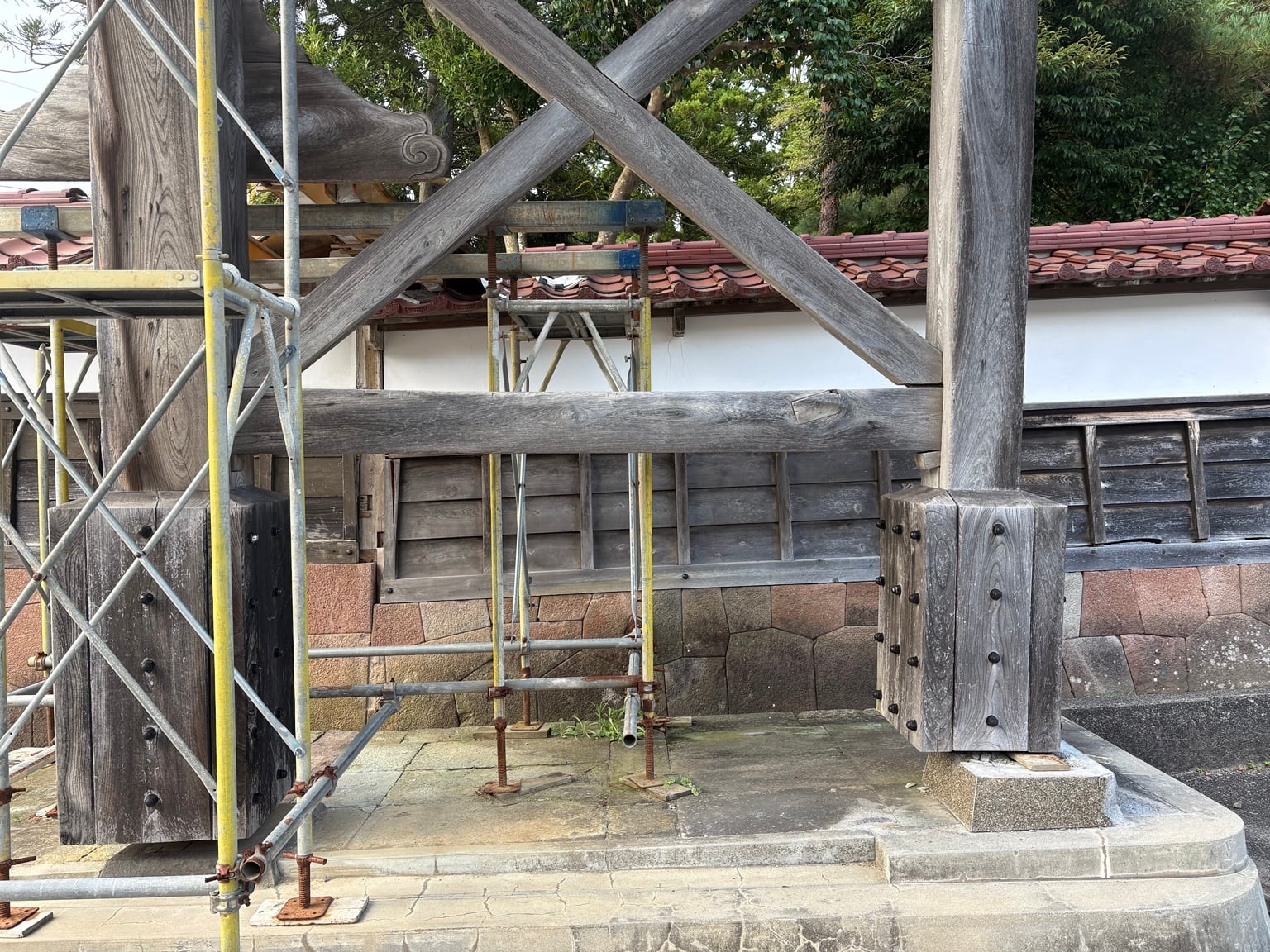
The damage in 2024 was substantial. Even so, many of the principal temple buildings remained standing. Across the grounds, enough survived for repair and reconstruction to be possible again.
The earlier seismic reinforcement and ground improvements had helped make that possible. Hearing about the work on site, we understood that those years of reconstruction had not been wasted.
Beginning again with what remains
Deputy Administrator Takashima also spoke with us about the two earthquakes and the reconstruction.
To complete 14 years of work, only to suffer major damage again soon afterward, carries a weight that dates and costs alone cannot convey.
Yet repair work is moving forward on the surviving buildings. The halls surrounded by scaffolding showed both the extent of the damage and the fact that structures remained which could be restored.
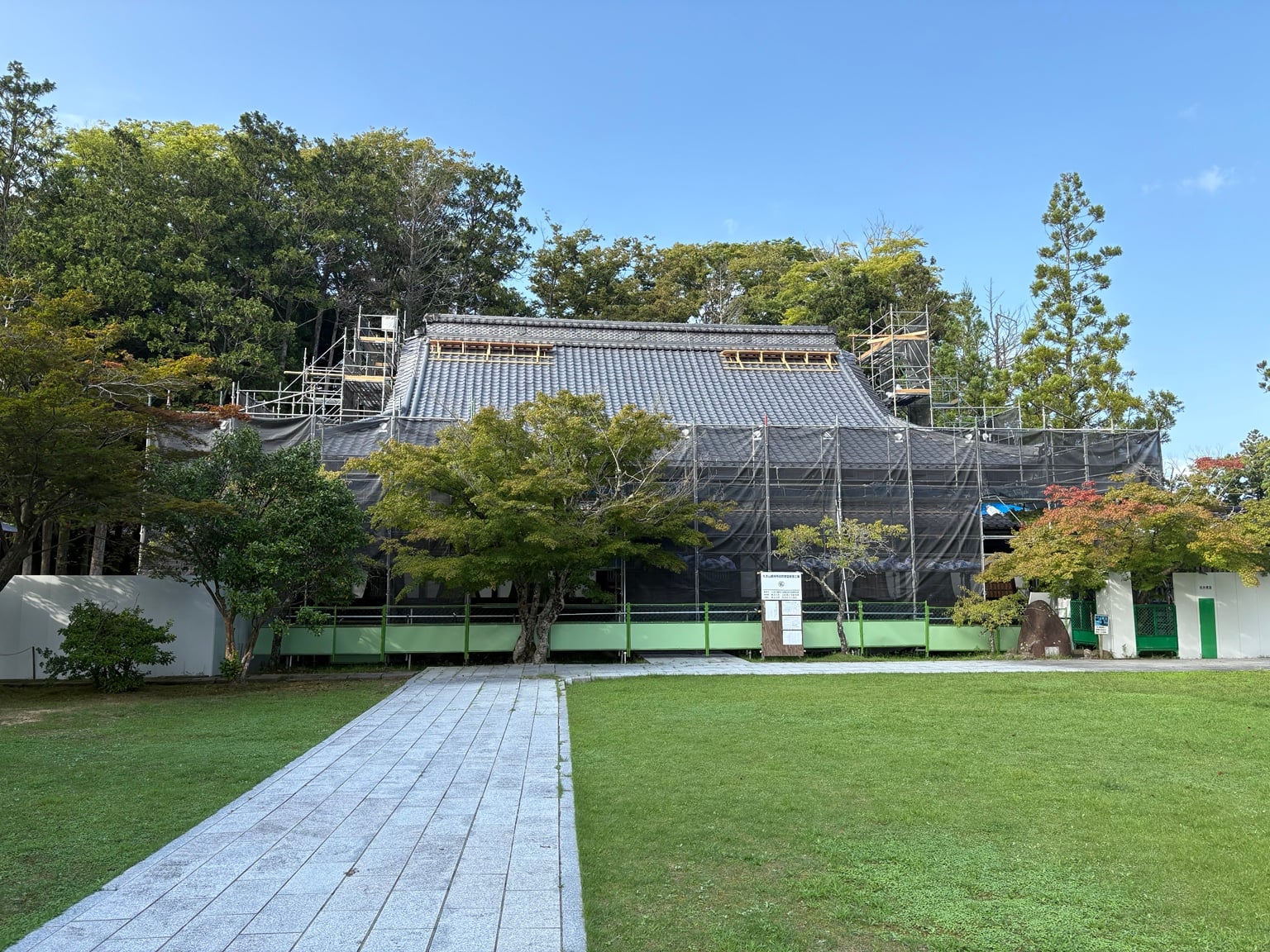
Perhaps reconstruction does not end when a place regains its former appearance. It also means leaving it in a condition from which people can begin again if another major disaster strikes.
Our conversations at Sojiji Soin helped us understand how the earlier reconstruction has become a foundation for the work taking place today.