In Monzen, Wajima, Noto, stands Sōjiji Soin, a head temple of the Sōtō school of Zen.
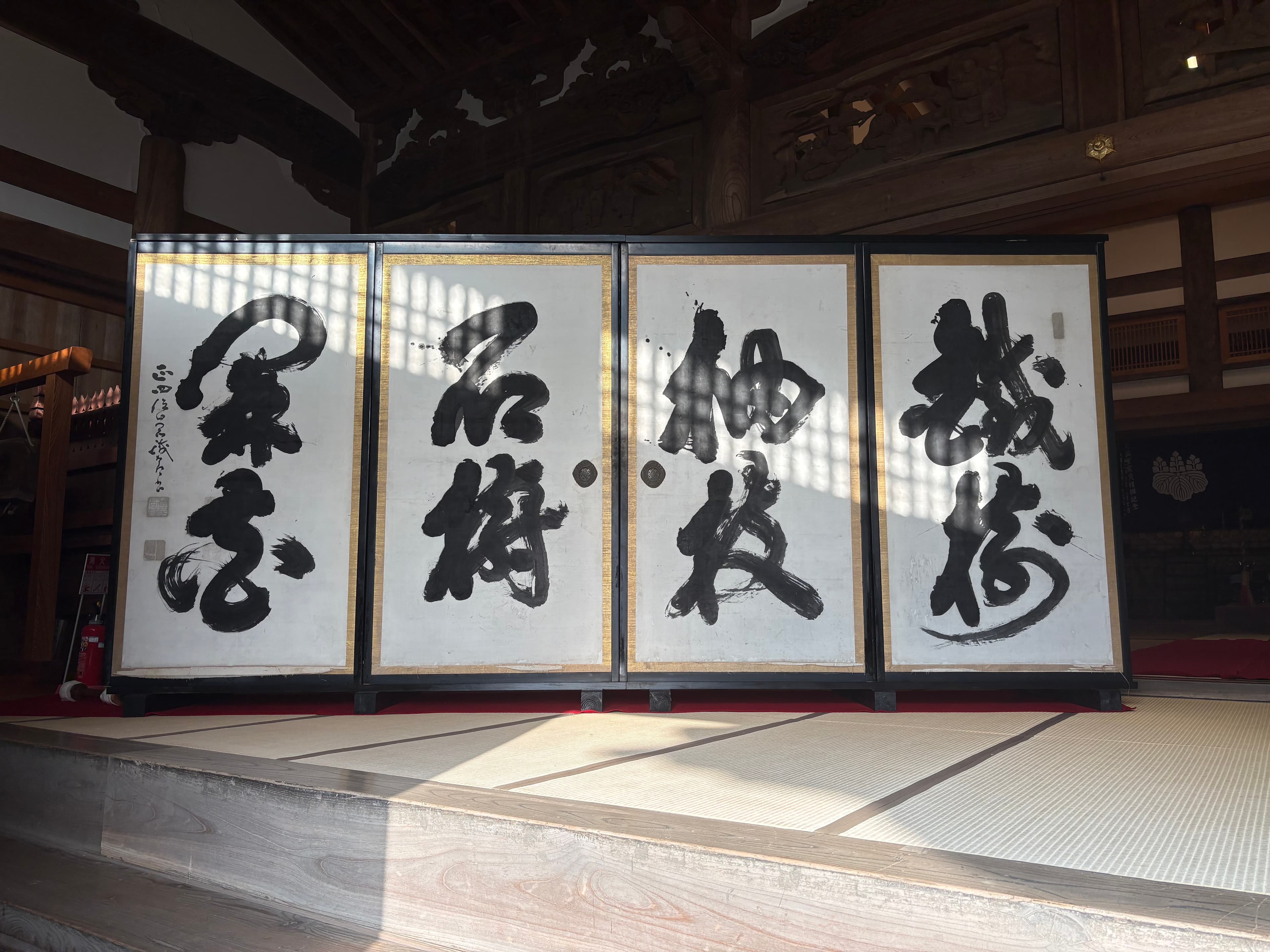
Its Buddha Hall preserves four large sliding-door calligraphy panels by Yamaoka Tesshū.
From right to left, they read:
Iron trees
put forth branches
stone trees
bloom
“Iron trees put forth branches, stone trees bloom.”
Taken literally, this means branches growing from trees of iron and flowers blooming on trees of stone.
Ordinarily, we would regard this as impossible.
Zen, however, questions that very judgment of “impossible.”
Drawing on what we have seen and what we know, we decide that “this is how things are.”
Yet what we now regard as true belongs to this moment. In the next moment, it is already in the past.
This is why we should not view things as fixed.
The image of iron trees growing branches and stone trees blooming expresses a Zen way of thinking: do not define the world solely by your own common sense.
Yamaoka Tesshū and Zen
Yamaoka Tesshū was a retainer of the shogunate who was active from the late Edo period into the Meiji era. In the events leading to the bloodless surrender of Edo Castle, he negotiated with Saigō Takamori.
He is also known for his deep commitment to swordsmanship, Zen, and calligraphy.
At Sōjiji Soin, Tesshū left the calligraphy:
“Iron trees put forth branches, stone trees bloom.”
It is a brief phrase, expressing the Zen idea of not fixing our way of seeing things.